
Thinking in code is harmful

Writing code involves logic, syntax, and execution flow. A developer thinks about loops, variables, and functions to solve a specific, isolated task. The code either works or it does not. System design operates at a higher elevation. It looks at the software as a collection of components that must interact with each other. When a senior engineer looks at a feature request, they do not immediately open a code editor. They pause to look at the data flow. They ask how information moves from the user to the server and finally to the database. They consider what happens if the network is slow or if a hard drive fails. This mental shift requires letting go of the desire for immediate implementation. It requires thinking about the shape of the system before worrying about the implementation details. (The Shift from Syntax to Structure).
Code thinking: the mental process of translating problems into logical instructions for a computer, becomes a weakness primarily when it is applied inappropriately, excessively, or prematurely. While essential for building software, this mindset can lead to over-engineering, analysis paralysis, and a disconnect from the actual user’s needs or business value.
Here is why “code thinking” can be a weakness, based on common pitfalls and expert insights:
- Premature Optimization and Complexity: Code thinking often focuses on how to make a solution efficient, rather than simply making it work. This leads to over-engineering, building complex, “clever” solutions for problems that haven’t happened yet, rather than simple, immediate solutions.
- Analysis Paralysis (Overthinking): Beginners often get stuck in a cycle of excessive research, fearing failure or trying to find the “perfect” plan, which prevents them from actually starting to code. This fear of making mistakes often stems from over-analyzing the steps before taking action.
- Loss of Human Perspective: A “programmer” mindset can focus too much on logic, syntax, and abstract algorithmic efficiency, neglecting the user experience, business value, or the messy reality of user needs.
- Ignoring Existing Solutions: Code thinkers often try to build everything from scratch to ensure it’s “right,” which leads to reinventing the wheel and creating technical debt instead of using existing, tested libraries.
- “Perfect Code” Syndrome: An obsession with clean, perfect code can lead to wasting time on trivial details rather than prioritizing functional code that solves the core problem. This can result in slow progress and an inability to deliver on time.
- Mental Exhaustion: The intense, relentless focus required for programming can lead to mental fatigue. Because code thinking doesn’t allow for much downtime, it can result in decreased performance and burnout.
How to Overcome This Weakness:
- Plan with Pen and Paper: Before writing code, break down problems into smaller parts and solve them mentally or on paper first.
- Embrace Mistakes: Accept that your first attempt will be imperfect. Debugging and fixing errors is a natural part of the learning process.
- Focus on Value over Complexity: Prioritize simple solutions that provide immediate value to the user.
- Take Breaks: Regularly step away from the screen to maintain creativity and avoid burnout.
It is now standard practice to use UML notation for design work prior to coding.
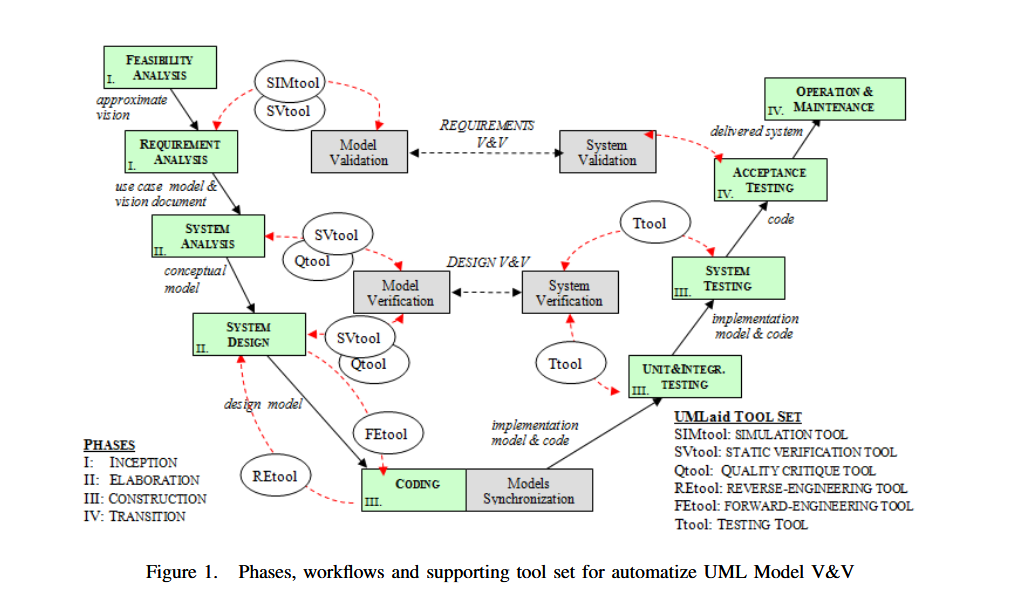
One of the most effective ways to improve your programming logic is to practice visualizing exactly how the computer will execute your code.Bibliography:
- https://algocademy.com/blog/why-your-logical-thinking-breaks-down-when-coding/
- https://designgurus.substack.com/p/beyond-coding-how-senior-engineers
- Baruzzo, A., & Comini, M. (2008). A Methodology for UML Models. 2008 International Conference on Software Testing, Verification, and Validation, 513–516. https://doi.org/10.1109/ICST.2008.66
- Larman, C. (2005). Applying UML and patterns: An introduction to object-oriented analysis and design and iterative development (3rd ed). Prentice Hall PTR, c2005.
- Zhang, Y., Yan, C., Li, Y., & Wang, W. (2020). Design of Fault Diagnosis System for Steam Turbine Based on UML. 2020 11th International Conference on Prognostics and System Health Management (PHM-2020 Jinan), 254–260. https://doi.org/10.1109/PHM-Jinan48558.2020.00052
- Gomaa, H. (2005). Designing Software Product Lines with UML. 29th Annual IEEE/NASA Software Engineering Workshop – Tutorial Notes (SEW’05), 160–216. https://doi.org/10.1109/SEW.2005.5
- Constantinou, A., & Perez, D. (2019). Developing a UML extension for the GUI. 47.
- Zelinski, J. (2021). Digital documents as data carriers and a method of data management guaranteeing the unambiguity of the recorded information. In Management and Strategies for Digital Enterprise Transformation (Vol. 1). IGI Global. https://www.igi-global.com/chapter/digital-documents-as-data-carriers-and-a-method-of-data-management-guaranteeing-the-unambiguity-of-the-recorded-information/275700
- Romanenko, E., Calvanese, D., & Guizzardi, G. (2024). Evaluating quality of ontology-driven conceptual models abstractions. Data & Knowledge Engineering, 102342. https://doi.org/10.1016/j.datak.2024.102342
- Rademacher, F. (2017). Formalizing Domain-driven Microservice Design with UML’s Profile Mechanism. https://www.conf-micro.services/2017/papers/Rademacher.pdf
- Łabiak, G., & Bazydło, G. (2018). Model driven architecture approach to logic controller design. 080003. https://doi.org/10.1063/1.5079137
- Topper, J. S., & Horner, N. C. (2013). Model-Based Systems Engineering in Support of Complex Systems Development. JOHNS HOPKINS APL TECHNICAL DIGEST, 32(1).
- Rauf, I., Ruokonen, A., Systä, T., & Porres, I. (2010). Modeling a composite RESTful web service with UML. Proceedings of the Fourth European Conference on Software Architecture Companion Volume – ECSA ’10, 253. https://doi.org/10.1145/1842752.1842801
- Grover, V., & Kumar, J. (2019). Slicing based on UML Diagram and Test Case Generation. International Journal of Computer Sciences and Engineering, 7(9), 95–101. https://doi.org/10.26438/ijcse/v7i9.95101
- Zelinski, J. (2020). Synthesis of MOF, MDA, PIM, MVC, and BCE Notations and Patterns. In Applications and Approaches to Object-Oriented Software Design: Emerging Research and Opportunities (pp. 78–89). IGI Global. https://www.igi-global.com/book/applications-approaches-object-oriented-software/235699
- Rademacher, F., Sachweh, S., & Zündorf, A. (2018). Towards a UML Profile for Domain-Driven Design of Microservice Architectures. In A. Cerone & M. Roveri (Eds), Software Engineering and Formal Methods (Vol. 10729, pp. 230–245). Springer International Publishing. https://doi.org/10.1007/978-3-319-74781-1_17
- Robert C. Martin. (2003). UML for Java programmers. Prentice Hall PTR.
- Robert C. Martin (with Grenning, J., & Brown, S.). (2018). Clean Architecture: A craftsman’s guide to software structure and design. Prentice Hall. https://raw.githubusercontent.com/sdcuike/Clean-Code-Collection-Books/master/Clean%20Architecture%20A%20Craftsman’s%20Guide%20to%20Software%20Structure%20and%20Design.pdf
- Pérez-Castillo, R., & Piattini, M. (2022). Design of classical-quantum systems with UML. Computing. https://doi.org/10.1007/s00607-022-01091-4
- Garland, J., & Anthony, R. (2003). Large-scale software architecture: A practical guide using UML. J. Wiley. https://largescalesoftwarearchitecture.com/